
Hours vary Mesa (602) 619-4185
Panther Garage Doors

Family-owned · Mesa Local

Garage Door Weather Seal Replacement in Mesa

Stop desert heat, monsoon dust, and pests at your garage door with a proper seal.
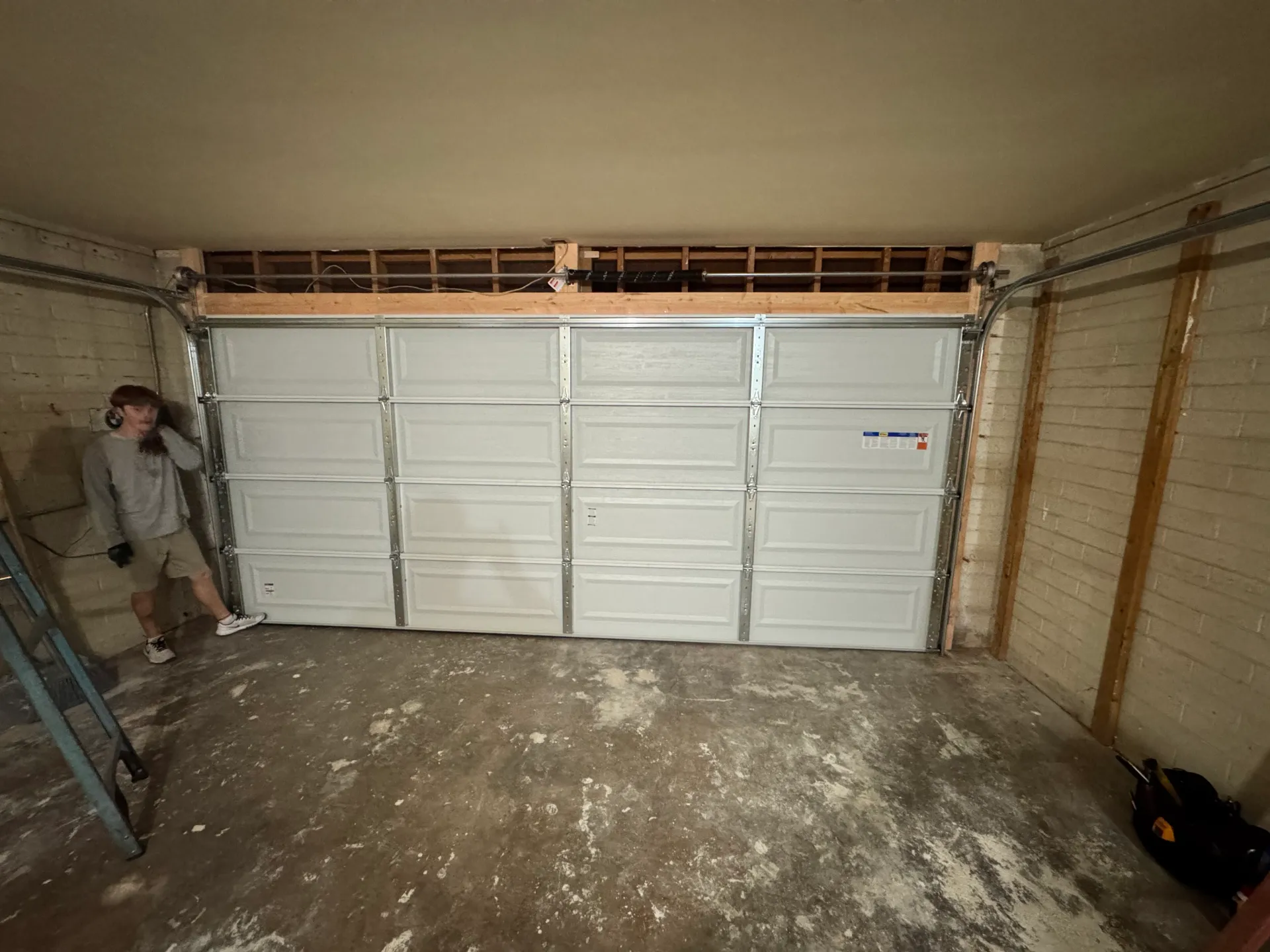
Garage Door Weather Seal Replacement in Mesa

Request an estimate

Tell us what you need

No obligation · Responds within 1 business day


By submitting this form you agree that we may contact you about your request and share your name and email address with partner companies for email marketing. We never share your mobile number or text message consent with third parties or affiliates for marketing or promotional purposes.

★★★★★
“These guys were early and exceeded expectations. Incredibly professional, knowledgeable and efficient. …”
Gregory W. · Google review

Mesa Weather Seal Replacement That Actually Holds

Garage door weather seal replacement in Mesa is what Panther Garage Doors has been doing for over 20 years, and in the East Valley's brutal climate, it's one of the highest-impact repairs a homeowner can make. If you can see daylight under or around your door, you're losing conditioned air every hour and giving scorpions, crickets, and rodents a direct line inside. Call (602) 619-4185 and we'll get out to you same day with the right seal for your specific door.

Mesa's summers run past 115 degrees, and UV exposure at that latitude breaks down standard vinyl and rubber seals faster than anywhere in the country. A seal that would last eight years in Ohio won't make it through three Arizona monsoon seasons before it cracks, warps, or pulls away from the door frame entirely. Proper seal replacement here isn't just swapping rubber strips. It means inspecting the door's bottom edge, side jambs, and top stop molding, cleaning the track surface, and choosing a seal material rated for extreme heat and UV. The type of seal matters too: T-style bottom seals, bulb seals, beaded seals, and threshold seals each serve a different purpose, and what's right for your door depends on the gap profile and door construction. Cost depends on door width, seal type, condition of the door's bottom retainer, and whether any frame or track prep is needed before the seal goes on. Every job is different -- contact Panther Garage Doors for an accurate estimate.

What a Full Seal Job Actually Covers

Most companies replace the bottom strip and call it done. We check all four sides.

Bottom Seal Replacement

The bottom seal takes the most abuse -- contact with concrete, debris, and temperature swings daily. We remove the old retainer if it's bent or corroded, clean the channel, and install a new T-style or bulb seal matched to your door's retainer profile.

Side Weatherstripping

Side jamb seals compress against the door face to block dust and air. In Mesa's haboob season, a failed side seal lets fine silt straight through. We measure and cut compression foam or vinyl bead strips to fit the full vertical run.

Top Seal Installation

The top stop is often overlooked until you see daylight above the door. We inspect and replace the top weatherstrip, making sure it creates a flush contact line across the full width without pinching the door's movement.

Threshold Seal Option

For garages with uneven concrete or doors that can't fully compress a standard bottom seal, a threshold seal bonded to the floor creates a second line of defense. Especially useful for homes where pest pressure is high or the floor has settled unevenly.

Rodent and Pest Guard

Standard rubber seals won't stop rodents from chewing through. Where pest infiltration is an issue, we can install a reinforced metal-backed seal that blocks entry at the bottom edge without interfering with the door's travel.

Frame and Surface Prep

Old adhesive, rust scale, and debris prevent a new seal from sitting flush. We clean and prep the door bottom, retainer channel, and frame contact surfaces before any new material goes on. Skip this step and the seal fails in months.

How We Do the Replacement

Three steps from worn-out to sealed tight.

  1. Inspect and Diagnose

    We check the full door perimeter, bottom retainer condition, frame alignment, and door balance. If a structural issue is causing the seal to fail -- like a sagging door section or a bent track -- we flag it before putting new seals on a problem that will just tear them up again.

  2. Remove, Clean, and Prep

    Old seals get pulled out completely. We clean the retainer channel and frame contact surfaces, removing debris, old adhesive, and any rust scale. A clean surface is what makes the new seal bond and seat correctly.

  3. Install and Test

    We cut and install each seal section to fit your specific door dimensions, then run the door through several cycles to confirm even contact across the full width. You should see zero light and feel zero airflow at every edge before we leave.

Arizona Climate

Why Mesa Seals Fail Faster Than Anywhere Else

Phoenix metro UV index runs among the highest in the country, and prolonged exposure at 110-plus degrees causes rubber and vinyl to oxidize and crack at a rate that surprises most homeowners who moved here from cooler states. A seal that looks fine in March can be pulling away from the door by October after a summer of thermal expansion and contraction cycles. Arizona's monsoon season adds a second threat: haboob dust is abrasive and fine enough to work through any gap larger than a millimeter, coating everything in the garage and clogging opener mechanisms. Then there's the pest factor. Scorpions, crickets, and roof rats are common throughout Mesa and the East Valley, and a cracked or lifted bottom seal is exactly the gap they use. The good news is that the right seal material installed correctly does hold up. We use heavy-duty, UV-stabilized vinyl and reinforced rubber that's rated for extreme heat exposure -- not the standard-grade strips sold at big-box stores, which typically aren't manufactured for desert climates. If your current seals are cracking, peeling, or leaving visible gaps, the East Valley summer is only going to accelerate the damage. A garage door maintenance check combined with new seals is the most cost-effective thing you can do before temperatures climb.
Residential garage door installed in Mesa, AZ showing door bottom and perimeter seal contact areas

Quick Reference

Signs Your Seals Need Replacement Now

Any one of these is enough reason to call.

  1. Daylight visible around any edge

    If you can see light under, beside, or above a closed door, conditioned air is escaping through the same gap.

  2. Dust or fine silt on the garage floor after wind

    Arizona haboob dust is the pressure test your seals fail silently. A film of silt after a storm means air -- and whatever's in it -- is getting through.

  3. Cracked, brittle, or flattened rubber

    Seals that have lost their shape can't compress against the door frame. A strip that crumbles when you touch it is done.

  4. Pests entering the garage

    Scorpions, crickets, and rodents don't teleport. If they're getting in, there's a physical gap. Most of the time it's the bottom seal or a side jamb strip that's pulled away.

Seal Material Options: What We Use and Why
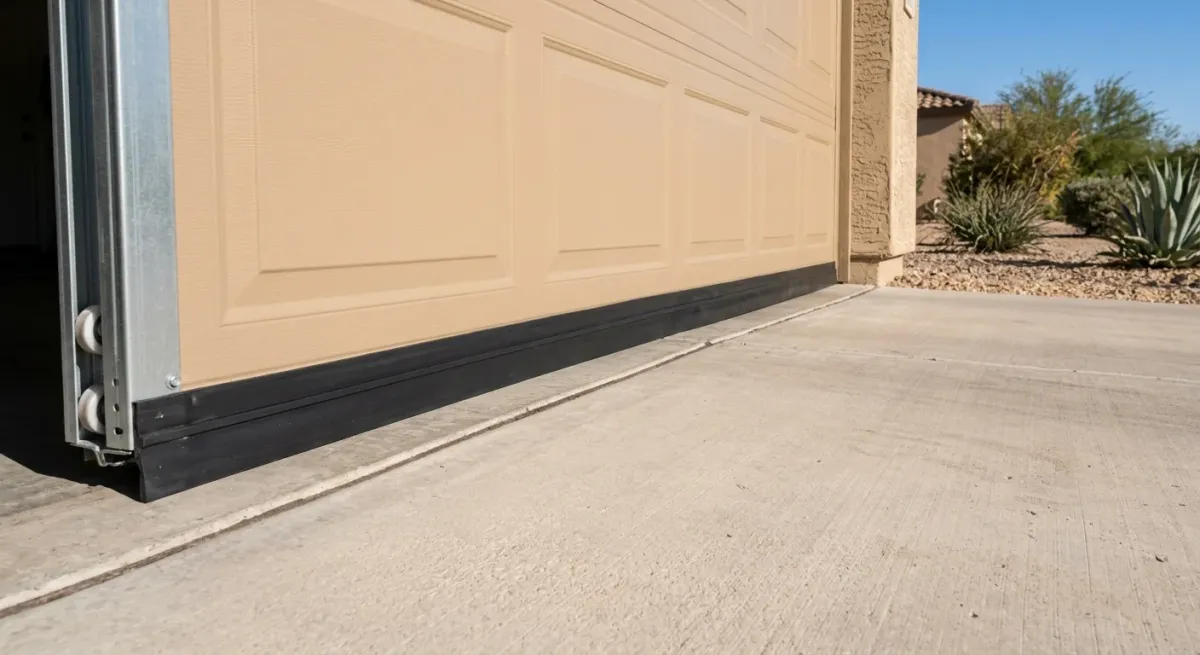
Not every seal is the same, and the wrong choice for Mesa's climate will fail early. T-style seals are the most common bottom seal type -- a rubber or vinyl strip with a T-shaped cross-section that slides into a metal retainer. They're durable and easy to replace when the retainer is in good shape. Bulb seals have a rounded profile that compresses more aggressively against irregular concrete, which makes them a better fit for older Mesa slabs that have settled unevenly. Beaded seals use two round beads that grip the retainer channel and resist pulling out under door movement -- a good choice when the door cycles frequently. For side and top weatherstripping, we use closed-cell foam or vinyl compression strips that maintain their shape through heat cycles. Open-cell foam compresses permanently in one season in this climate. For pest-specific concerns, reinforced bottom seals with a galvanized steel backer stop rodents that would chew through standard rubber in a weekend. If your garage door spring repair or cable repair was recent and the door is now balanced and running true, seal replacement is the logical next step to finish weatherproofing the whole system.
bottom seal replacement work, professional service in Mesa, AZ

What Panther Garage Doors Stands Behind

20+ years in the East Valley. Spencer Carden and a licensed crew who do the work themselves.

We don't subcontract. Every technician who shows up works for Panther Garage Doors directly, which means the person Spencer sends is accountable to the same 100% satisfaction guarantee he's been backing for over two decades.
Backed personally by

Spencer Carden

Owner · Panther Garage Doors

20+ years serving Mesa and the East Valley
Spencer Carden has been doing this work in this market since before most competitors existed.
Licensed crew, no subcontractors
We never hand your job off. The same team that takes your call does your install.
100% satisfaction guarantee
If the work isn't right, we make it right. That's not a slogan -- it's the standard we've operated on for 20 years.
Free estimates, same-day availability
No diagnostic fees. No guessing on price. We tell you what it costs before we start.

Weather Seal Questions We Hear Every Week

Why do garage door seals wear out faster in Mesa than other places?
UV radiation and sustained heat above 110 degrees cause rubber and vinyl polymers to oxidize and lose elasticity faster than in temperate climates. Thermal expansion and contraction cycles -- the door frame and seal expanding in 115-degree heat and contracting overnight -- add mechanical stress on top of UV degradation. A seal rated for 10 years in a northern climate might last three to five years in the Phoenix metro before cracking and pulling away.
Which type of garage door seal is better, vinyl or rubber?
For Mesa's climate, UV-stabilized vinyl generally outlasts standard rubber because it holds up better under prolonged direct sun. That said, reinforced rubber bulb seals compress better on uneven concrete and handle the repeated impact of the door closing more gracefully. The honest answer is that material quality matters more than type: a premium rubber seal beats a cheap vinyl one every time. We choose based on your specific door profile and floor condition, not by default.
What is the difference between a 1/4-inch and a 5/16-inch garage door seal?
The measurement refers to the thickness of the retainer slot the T-style seal slides into. A 1/4-inch seal fits a narrower retainer channel, common on older doors and some lighter residential models. A 5/16-inch seal fits the wider channel found on heavier doors and most doors manufactured in the last decade. Installing the wrong size means the seal either falls out under door movement or won't seat properly. We check the retainer before ordering material so you're not paying for a return visit.
Will replacing the seals help keep scorpions and desert pests out of my garage?
Yes, but the seal needs to make full contact across the entire bottom edge to be effective. Bark scorpions can fit through a gap roughly 1/16 of an inch wide, so a standard bottom seal with any lifting or warping isn't stopping them. A properly installed, compressed bottom seal with no daylight visible eliminates that entry point. For extreme pest pressure, a reinforced metal-backed bottom seal adds another layer of protection that scorpions and rodents can't chew through.
Can weather seal replacement actually lower my energy bills?
It depends on how bad the current seals are and whether your garage is attached to the living space. An attached garage with failed seals allows outside air directly into your home's thermal envelope. In a Mesa summer, that's 115-degree air fighting your AC. Tight seals reduce that load. You won't see dramatic bill changes from seals alone if you have other insulation gaps, but a well-sealed door is a real contributor -- especially when combined with an insulated door panel.
How often should garage door seals be inspected in Arizona?
Inspect them once a year, ideally in late spring before summer heat peaks. Run your hand along the bottom seal with the door closed and look for daylight at all four edges. In Mesa's climate, most seals need replacement every three to five years rather than the eight to ten years common in cooler states. If you're scheduling a garage door maintenance visit, seal inspection is already part of what we check.
Will replacing seals help keep scorpions out of my garage?
Yes -- if the seal makes full contact across the entire bottom edge. Bark scorpions fit through a 1/16-inch gap, so any lifting or warping defeats the seal's purpose. A properly compressed bottom seal with zero visible daylight eliminates that entry point. For high pest pressure, we install reinforced metal-backed seals that scorpions and rodents can't chew through.
Can weather seal replacement lower my energy bills in a Mesa home?
It depends on how bad the existing seals are and whether your garage is attached to living space. An attached garage with failed seals allows 115-degree outside air directly into your home's thermal envelope, adding real load to your AC. Tight seals reduce that load. The effect is most noticeable in attached garages with poorly insulated doors -- fixing both together has the biggest impact on cooling costs.
How often should I have my garage door seals inspected in Arizona?
Once a year, in late spring before peak summer heat. Run your hand along the bottom seal with the door closed and look for daylight at all four perimeter edges. In Mesa's climate, most seals need replacement every three to five years rather than the eight to ten years typical in cooler states. We include seal inspection in every garage door maintenance visit.
Can you weather seal a garage door on the same day I call?
Yes. Same-day service is available Mon through Sat, and we carry common seal sizes and types on the truck. If your door needs a specialty profile or an oversized retainer, we'll confirm availability when you call. Most standard residential bottom seal and weatherstripping replacements are completed in a single same-day visit with no return trip needed.

We Cover the Full East Valley

Panther Garage Doors handles weather seal replacement throughout Mesa and the surrounding East Valley. Same-day service available Mon through Sat, 24/7. Sunday hours 7 AM to 7 PM.

Stop the Heat. Stop the Pests. Call Today.

If light's coming through your door, so is everything else the desert has to offer.

Related

Next step

Tell us about the job

Your name, your number and what needs doing. A person from Panther Garage Doors gets back to you.

Rather talk now?(602) 619-4185

No obligation · Responds within 1 business day


By submitting this form you agree that we may contact you about your request and share your name and email address with partner companies for email marketing. We never share your mobile number or text message consent with third parties or affiliates for marketing or promotional purposes.